If you're using OneStream today, IFRS 18 is about to test your reporting model again. The standard takes effect January 1, 2027, but calendar-year companies need 2026 comparative figures under the new structure the moment they report under it: a design decision for your OneStream environment now, not a reporting problem for next year.
What actually changes under IFRS 18?
IFRS 18 changes how you present and explain financial performance, not how you recognize or measure profit. The new standard introduces a more consistent structure for the income statement, built around five categories for income and expenses:
- Operating
- Investing
- Financing
- Income tax
- Discontinued operations
That structure makes performance easier to compare across companies, but it also means you have to be deliberate about where every income and expense item lands. Most organizations will also need to produce two new subtotals: operating profit or loss, and profit or loss before financing and income taxes. Getting there is not just a rearrangement of the P&L. You will need to determine which activities count as operating, investing, or financing for your business model, and items like interest, foreign exchange results, associates, joint ventures, and disposal results often need extra analysis to classify correctly.
How IFRS 18 reshapes your chart of accounts
The bigger shift happens underneath the report, in the chart of accounts and the data behind it.
Right now, many charts of accounts group different types of income or expense together: combined finance income and expense, net foreign exchange results, broad "other income and expense" buckets. IFRS 18 exposes those mixed buckets.
To classify consistently, you may need to separate:
- Interest on loans and interest on leases
- Financing fees and interest expense
- Investment income
- Discount unwind and other financing-related effects
- Operating and financing-related foreign exchange results
In other words, IFRS 18 is not only a presentation exercise. It can surface real limitations in your chart of accounts, data model, and reporting structure.
From classification to repeatable reporting
Defining the classification logic is step one. Applying it the same way every period is step two. Your new income statement needs to be reproducible: consistent categories, subtotals, labels, and comparative figures, period after period. During the transition, you will likely need to run your current reporting view alongside the new IFRS 18 structure. That puts real pressure on data quality. When accounts are not mapped consistently, or source data is missing the detail you need, manual reclassifications creep back into the close.
How IFRS 18 formalizes management-defined performance measures
IFRS 18 also formalizes Management-defined Performance Measures (MPMs). Chances are your organization already reports measures like Adjusted EBITDA, Underlying EBIT, or Adjusted Operating Profit. IFRS 18 does not take those away, but it does introduce clearer rules for how qualifying MPMs are defined and disclosed.
If a measure qualifies as an MPM, you need a consistent definition and a reconciliation to the relevant IFRS subtotal. That means the adjustments behind it have to be identifiable, traceable, and applied the same way every time. For finance teams, this is a governance question as much as a reporting one. Measures that used to live in a slide deck or a spreadsheet now need to sit inside a controlled, repeatable process.
Translating IFRS 18 into OneStream
IFRS 18 may look like a format change to the income statement, but for OneStream users it is really a question of data structure, system design, and reporting governance. Once the accounting choices are settled, the real question is practical: how do you translate your existing IAS 1 structure into IFRS 18 without bolting on another manual layer?
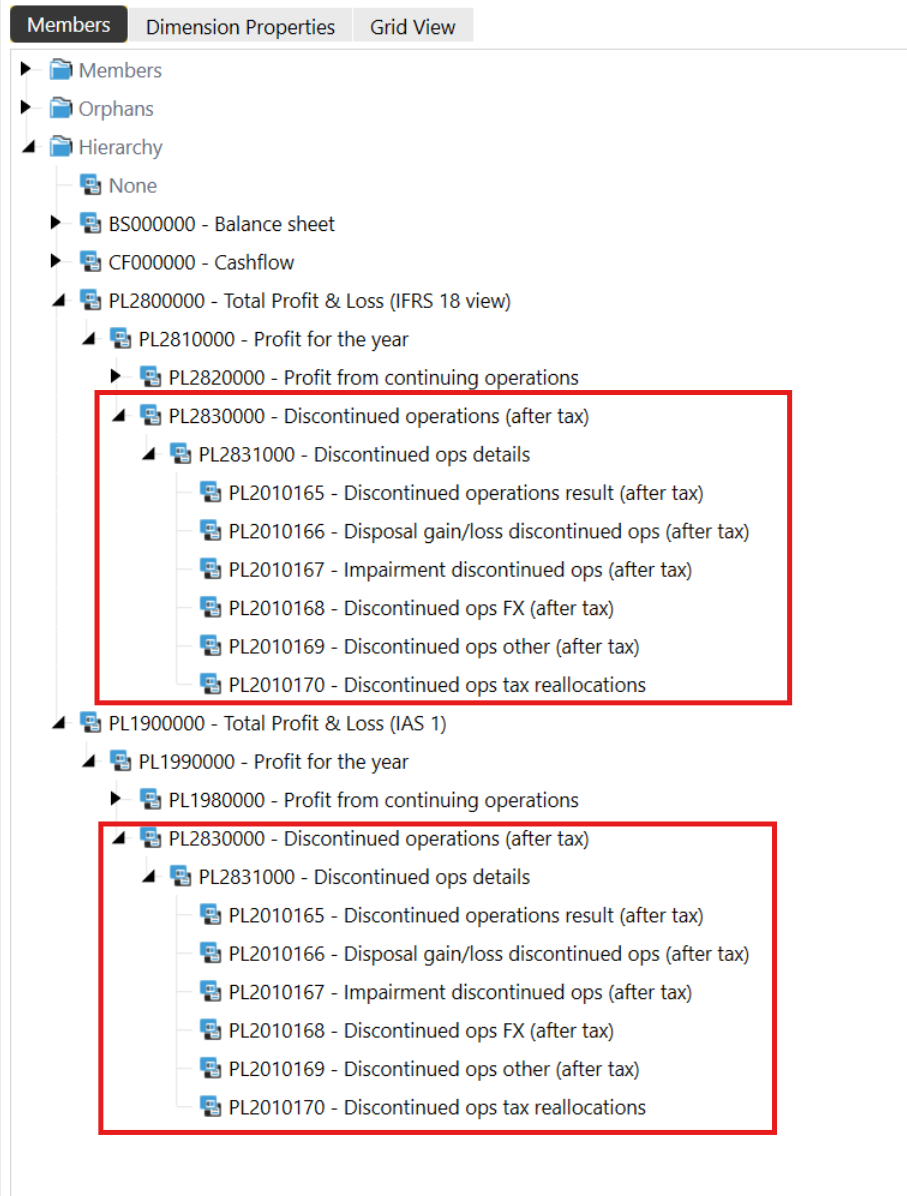
For your future-state P&L, the good news is that most base accounts do not need to change. You can keep the same base accounts available under both the existing IAS 1 structure and the new IFRS 18 structure, just grouped under different parent accounts to build the required IFRS 18 view. That means your ongoing solution is mostly a change in reporting hierarchy, not a rebuild of the P&L at the base-account level.
The heavier lift sits in the transition period. Historical comparative data needs to exist in both structures so you can reconcile the IAS 1 and IFRS 18 views side by side. In OneStream, two approaches work well:
- Using member formulas to derive the IFRS 18 comparative view
- Using a dedicated mapping and calculation dashboard
For a controlled transition, we recommend the dashboard approach. It builds the IFRS 18 comparative view from your existing data, keeps the IAS 1-to-IFRS 18 mapping in one place, separates that mapping logic from the final report, and gives you a transparent reconciliation trail for review and audit.
A practical three-step approach
Step 1: Define the IFRS 18 structure and transition scope.
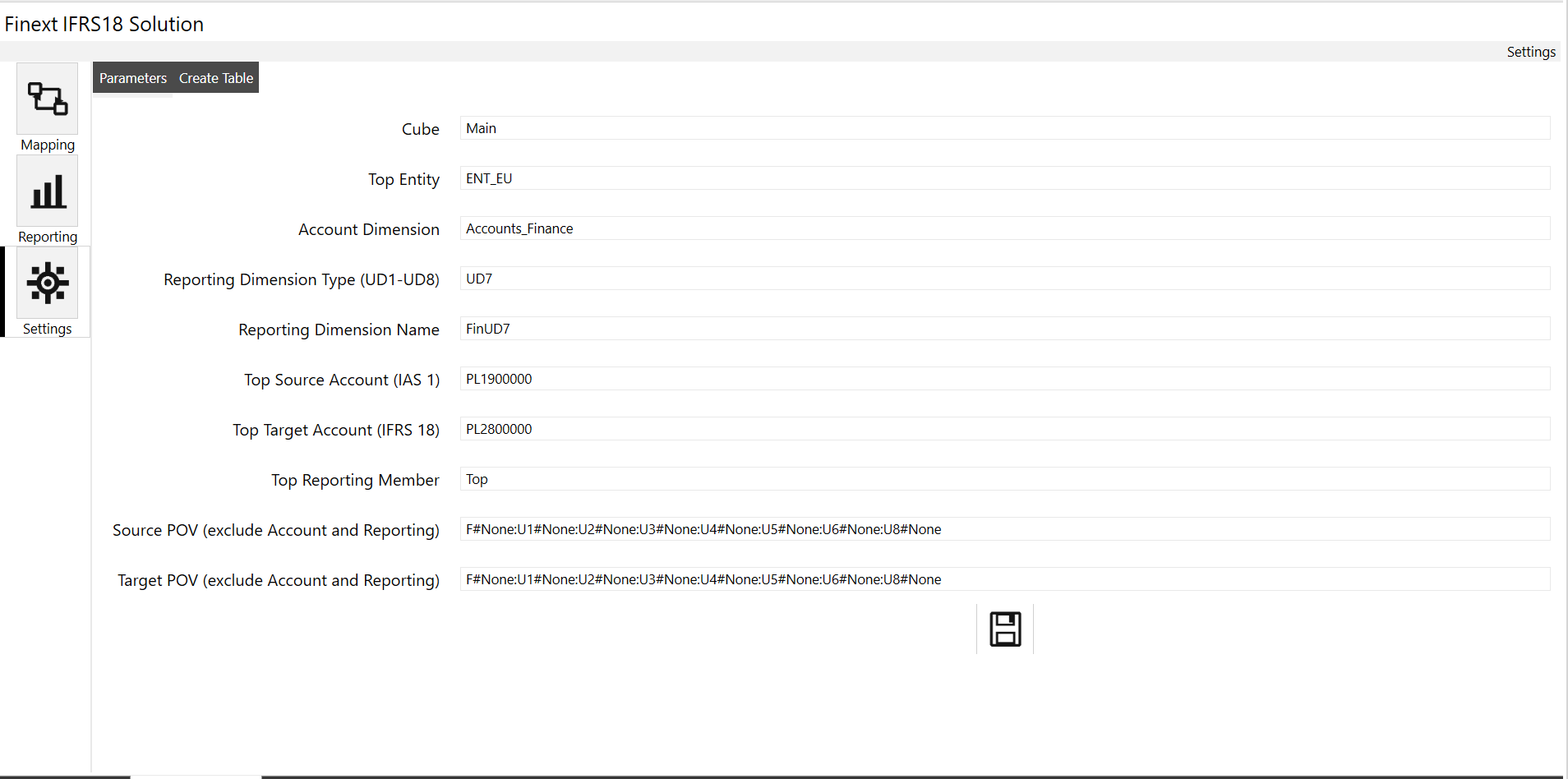
Start by determining how your existing base accounts should roll up into the new IFRS 18 parent accounts. For the transition calculation, define the cube, entity scope, source and target accounts, reporting dimension, and relevant POV settings. This keeps your base-account structure intact while defining where the IFRS 18 comparative view gets built.
Step 2: Build and maintain the transition mapping.
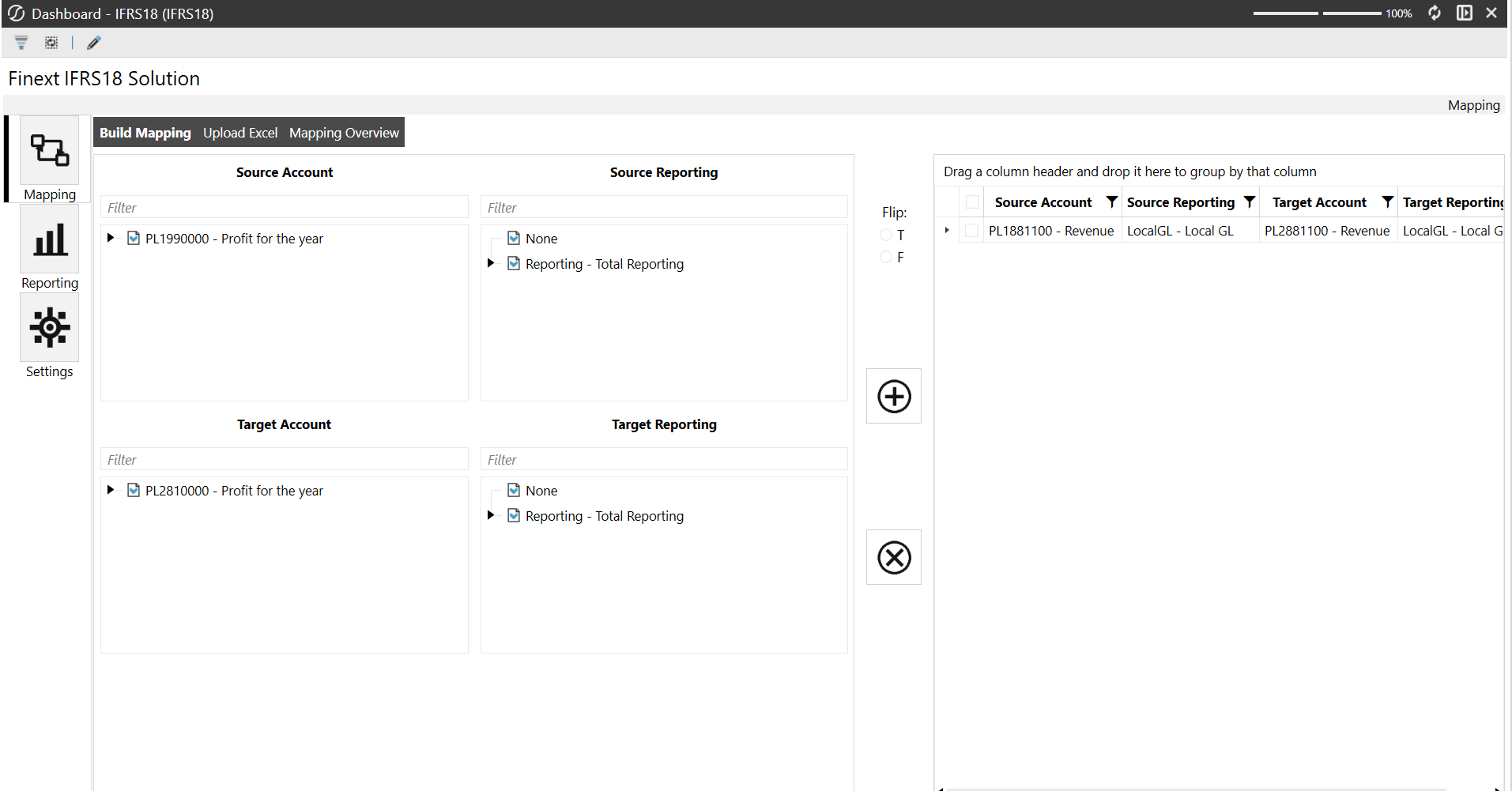
Where historical data needs to show up in the IFRS 18 structure, map the relevant source accounts and reporting members to their IFRS 18 targets. You can maintain the mapping directly in the dashboard or upload it through Excel, which makes it visible and easier to govern than logic scattered across multiple formulas or reports.
Step 3: Calculate, reconcile, and validate.
Once the mapping is approved, the calculation builds the parallel IFRS 18 view without reloading your historical source data. The reporting screen can then show the IAS 1 result, the IFRS 18 adjustments, and the resulting IFRS 18 presentation side by side.
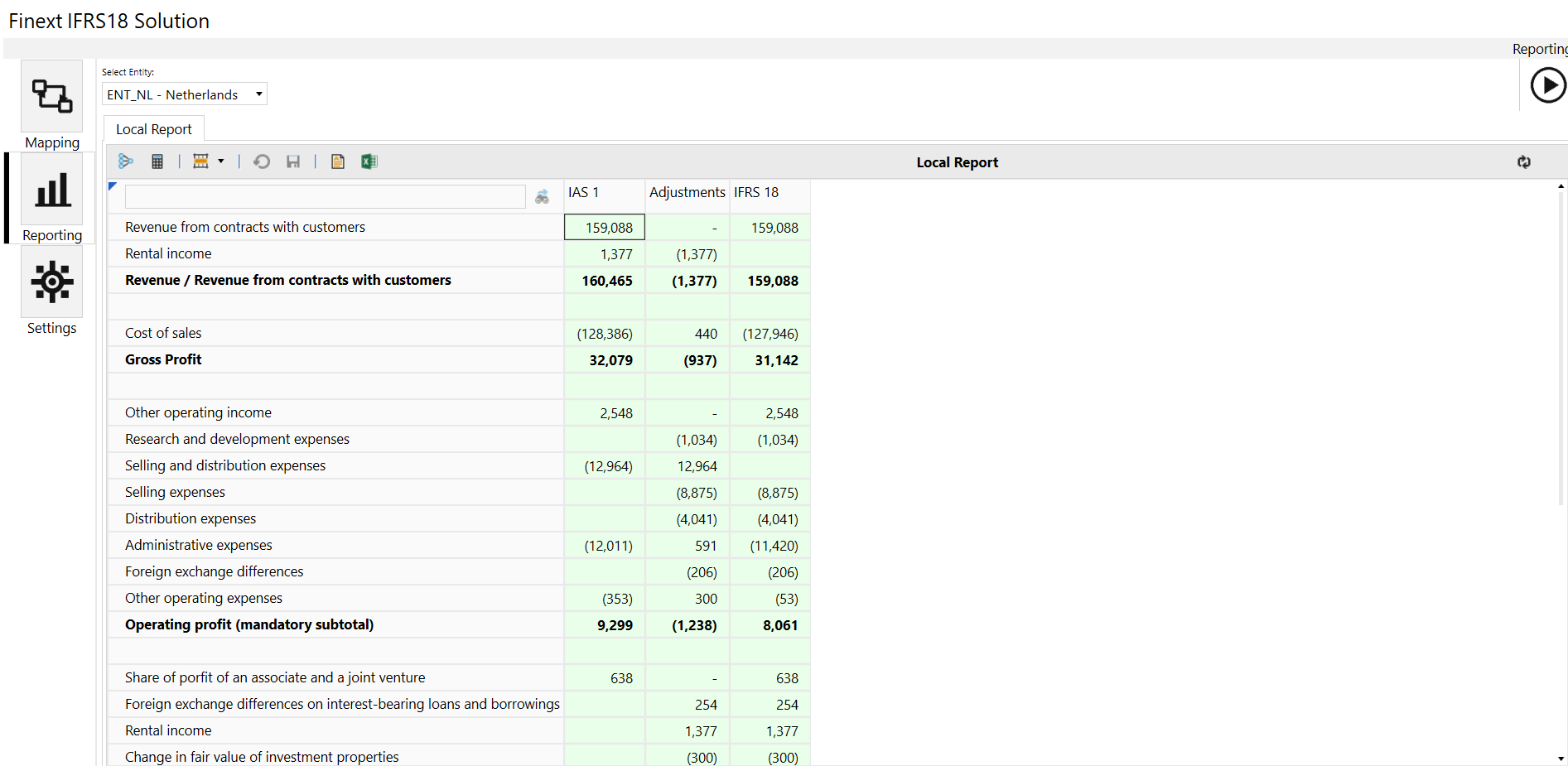
That side-by-side view matters. It lets your finance team spot unmapped items, explain reclassifications, and show how the same underlying data is presented under IAS 1 and IFRS 18. The result is a user-friendly process with one central place to maintain the transition mapping and calculations.
IFRS 18 is not about building one more report in OneStream. It is about creating a reporting process that is controlled, repeatable, and understandable before your first IFRS 18 reporting cycle begins.
